You’ve written great content. You’ve fixed your website speed. You’ve even nailed your on-page SEO. And yet… your competitor still outranks you.
Sound familiar?
Here’s the uncomfortable truth: rankings without backlinks are like a resume without references. Google trusts you more when other credible websites vouch for you — and that’s exactly what backlinks do.
But not every backlink helps. Some can actually hurt you. That’s where backlink tools come in — they help you find the right opportunities, avoid toxic links, and track what’s actually moving the needle.
In this guide, we’ll break down the best backlink tools in 2026, how to use them (even if you’re not a technical person), and how businesses — from local shops to growing e-commerce brands — are using them to climb search rankings and generate real leads.
Let’s dig in.
What Are Backlink Tools? (And Why Should You Care?)
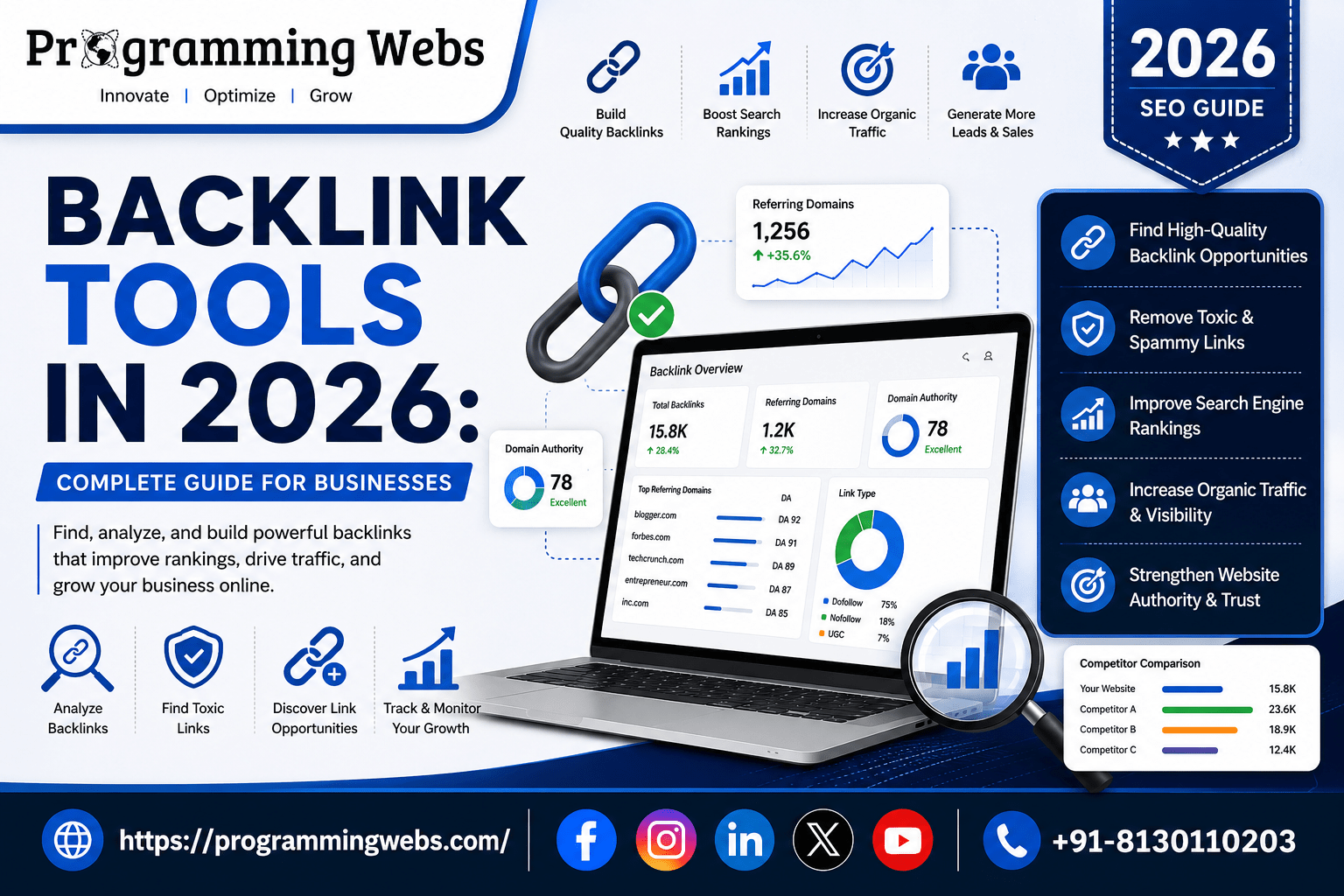
A backlink tool is software that helps you find, analyze, and monitor links pointing to your website from other domains. Think of it as your detective kit for SEO — it tells you:
- Who’s linking to you (and who isn’t, but should be)
- Which links are helping your rankings
- Which links might be hurting your site’s trust score
- Where your competitors are getting their links from
Search engines like Google still treat backlinks as one of the strongest ranking signals. A site with strong, relevant backlinks tends to rank higher, get indexed faster, and build long-term authority — even when algorithms update.
If you’re serious about visibility, a solid backlink tools guide isn’t optional anymore. It’s part of doing business online.
Why Backlinks Still Matter in 2026
Some marketers claim backlinks are “dying.” They’re not. They’ve just gotten smarter.
- Google’s own guidelines continue to reference links as a key trust and authority signal, alongside content quality and user experience.
- AI-driven search experiences (like AI Overviews) still lean on domains with strong external validation when choosing which sources to cite.
- Businesses with strong backlink profiles consistently show better resilience during algorithm updates, because authority isn’t something an algorithm change can erase overnight.
In short: content gets you noticed. Backlinks get you trusted. And trust is what converts visitors into leads.
Best Backlink Tools in 2026 (Tested & Compared)
Here’s a practical breakdown of the tools businesses, agencies, and even college marketing students rely on today.
1. Ahrefs
Still considered the gold standard for backlink analysis.
- Massive live backlink index
- Competitor backlink gap analysis
- Toxic link detection
- Great for agencies and enterprises
Best for: Businesses that want deep, data-rich insights and don’t mind a learning curve.
2. SEMrush
A well-rounded tool that combines backlink tracking with keyword and competitor research.
- Backlink Audit tool flags spammy links automatically
- Link Building Tool suggests outreach opportunities
- Good integration with content marketing workflows
Best for: SMBs that want an all-in-one marketing dashboard, not just backlinks.
3. Moz Link Explorer
Known for its Domain Authority (DA) metric, which many marketers still use as a quick trust benchmark.
- Simple, beginner-friendly interface
- Spam Score feature to flag risky links
- Great free-tier options
Best for: Startups and students learning SEO fundamentals.
4. Majestic SEO
Focuses purely on link intelligence with metrics like Trust Flow and Citation Flow.
- Deep historical link data
- Useful for large-scale competitor research
Best for: Enterprises running large content and PR campaigns.
5. Ubersuggest
A budget-friendly option for smaller businesses just getting started.
- Simple backlink overview
- Domain comparison feature
- Affordable pricing for solopreneurs
Best for: Small businesses and e-commerce store owners on a tight budget.
Quick Tip: No single tool gives you the full picture. Most agencies (including ours) cross-check data across 2–3 tools before making link-building decisions.
How to Use Backlink Tools the Right Way (Step-by-Step)
Buying access to a tool isn’t enough — knowing how to read the data is what makes the difference.
Step 1: Audit Your Current Backlink Profile
Start by checking your existing links. Look for:
- Referring domains (how many unique sites link to you)
- Anchor text distribution (too much exact-match anchor text looks spammy)
- Toxic or spammy backlinks that need disavowing
Step 2: Study Your Competitors
Plug in a competitor’s domain and look at:
- Where their strongest backlinks come from
- What content earns them the most links (guides, tools, case studies)
- Gaps you can fill with better content
Step 3: Build a Target List
Not all links are equal. Prioritize:
- Industry-relevant blogs and publications
- Local business directories (especially useful if you’re focused on local SEO)
- Guest post opportunities on trusted domains
Step 4: Track Progress Monthly
SEO is slow by nature. Set a monthly check-in to review:
- New referring domains gained
- Any lost or broken backlinks
- Ranking movement tied to link-building efforts
Real-World Example: How Backlinks Helped a Small E-commerce Brand Grow
Imagine a small Shopify store selling handmade skincare products. For months, their organic traffic barely moved despite decent product pages and blog content.
After running a proper backlink tools guide-based audit, the issue became clear: almost zero quality referring domains, and a handful of spammy directory links dragging down trust.
The fix was straightforward:
- Disavowed toxic links
- Reached out to niche beauty and lifestyle bloggers for genuine reviews
- Got listed on relevant e-commerce and local business directories
- Combined this with focused e-commerce SEO improvements
Within a few months, organic traffic and product page rankings improved significantly — and so did checkout conversions. This is a common pattern we see across client projects: it’s rarely one big fix, it’s consistent, correct link-building over time.
Backlink Tools Tips: Common Mistakes to Avoid
Even with the best backlink tools, businesses often shoot themselves in the foot. Watch out for:
- Chasing quantity over quality — 5 relevant, authoritative links beat 50 random directory links.
- Ignoring anchor text diversity — over-optimized anchors can trigger red flags.
- Buying backlinks in bulk — a shortcut that often leads to penalties.
- Forgetting internal links — while auditing external links, don’t neglect strategic internal linking across your own blog and service pages.
- Not tracking lost links — websites change, pages get deleted, and links break. Regular audits catch this early.
Backlink Tools vs. DIY Link Building: What’s Better for Your Business?
| Factor | DIY Approach | Professional Backlink Strategy |
|---|---|---|
| Time Investment | High | Low (outsourced) |
| Learning Curve | Steep for beginners | Managed by experts |
| Risk of Penalties | Higher (if untrained) | Lower (data-driven approach) |
| Scalability | Limited | High |
| Cost | Tool subscriptions only | Service-based, ROI-focused |
If you’re a startup or solo founder with time on your hands, DIY can work as a learning exercise. But for businesses that need consistent growth without the guesswork, partnering with a team that specializes in SEO services usually pays off faster.
Why Choose ProgrammingWebs for Your Backlink & SEO Strategy?
We won’t pretend backlink building is magic — it’s data, patience, and the right relationships. That’s exactly what we bring to the table.
At ProgrammingWebs, our team combines advanced backlink tools with hands-on outreach to build links that actually move rankings — not just numbers on a dashboard.
Here’s what sets us apart:
- Custom strategies, not templated link-building packages
- Deep experience across WordPress and Shopify SEO ecosystems
- Transparent monthly reporting — you see exactly what links were built and why
- A track record with SMBs, startups, and e-commerce brands, visible in our portfolio
- Full-funnel support — from website development to conversion rate optimization, so backlinks translate into real business growth
Whether you’re a growing startup or an established brand looking to scale, our services are built around one goal: turning your website into a lead-generating asset, not just a digital brochure.
Curious what a proper backlink audit could uncover for your site? Get in touch with our team for a free consultation.
Frequently Asked Questions
1. What are the best backlink tools for beginners? Moz Link Explorer and Ubersuggest are considered the most beginner-friendly, offering simple dashboards and free-tier access to get started without a steep learning curve.
2. How many backlinks does a website need to rank well? There’s no fixed number. Quality and relevance matter far more than quantity — a handful of authoritative, niche-relevant backlinks often outperform hundreds of low-quality ones.
3. Are paid backlinks safe to use? Buying backlinks in bulk from link farms violates Google’s guidelines and risks penalties. Earned or genuinely placed links through outreach and quality content are the safer, longer-term approach.
4. How long does it take to see results from backlink building? Most businesses start noticing ranking improvements within 3 to 6 months, depending on competition level, niche, and consistency of the link-building effort.
5. Can backlink tools help identify harmful links? Yes. Tools like Ahrefs and SEMrush include toxic link detection and spam scoring features that help you identify and disavow harmful backlinks before they damage your rankings.
6. Do backlinks matter for local businesses too? Absolutely. Local directory listings, community site mentions, and regional press coverage all contribute to stronger local search visibility alongside dedicated local SEO efforts.
7. Is it better to use one backlink tool or multiple? Using 2–3 tools together gives a more complete picture, since each tool indexes backlinks slightly differently. Cross-referencing data reduces blind spots.
Final Thoughts: Don’t Let Weak Backlinks Hold You Back
Backlinks aren’t just a technical checkbox — they’re proof to Google (and to your future customers) that your business is credible, relevant, and worth trusting.
The right backlink tools, used consistently and correctly, can be the difference between page one and page ten of search results. And in 2026, with search becoming more competitive and AI-driven, that gap only matters more.
If you’re ready to stop guessing and start building an SEO strategy that actually brings in leads, our team at ProgrammingWebs is here to help.
📞 Call us today, 🌐 visit our website, or 📩 request a free SEO audit — let’s build the authority your business deserves.