Ever spent hours writing “perfect” content, only to watch it sit on page 4 of Google while a competitor with weaker content outranks you? You’re not alone. Most business owners aren’t losing because their content is bad — they’re losing because they’re flying blind, without the right data.
That’s exactly what the best SEO tools are built to fix. They show you what’s actually working, what’s broken on your site, what your competitors are doing right, and which keywords are worth your time.
In this best SEO tools guide, we’re breaking down the top tools businesses, startups, and e-commerce brands are using in 2026 — what they do, who they’re for, and how to pick the right one without wasting your budget. Whether you’re a solo founder, a marketing manager, or a student learning SEO for the first time, this guide is written to actually make sense.
Let’s get into it.
Why the Right SEO Tools Matter More Than Ever in 2026
Search has changed a lot. Google’s algorithms now weigh user experience, content depth, and E-E-A-T (Experience, Expertise, Authoritativeness, Trustworthiness) more heavily than ever. AI-generated search summaries are changing how people find answers. Ranking on gut feeling alone just doesn’t cut it anymore.
Here’s what’s shifted recently:
- Search behavior is increasingly split between traditional Google results and AI-powered answer engines.
- Core Web Vitals and page experience continue to influence rankings, not just keywords.
- Competition for commercial keywords has intensified across nearly every industry, especially e-commerce.
- Voice search and mobile-first indexing keep pushing technical SEO higher up the priority list.
This is exactly why choosing the best SEO tools — not just any tool — has become a business decision, not just a marketing one.
What Makes a Tool One of the “Best SEO Tools” in 2026?
Before jumping into the list, it helps to know what actually separates a great SEO tool from a mediocre one. Look for:
- Accurate, updated data — outdated keyword volumes or backlink data will mislead your strategy.
- Ease of use — a powerful tool nobody on your team can operate isn’t powerful at all.
- Actionable insights, not just dashboards full of numbers.
- Scalability — the tool should grow with your business, from a single website to multiple client accounts.
- Good support and community — because you will get stuck at some point.
Keep this checklist in mind as you go through the list below.
Best SEO Tools in 2026: Category-by-Category Breakdown
Rather than throwing 20 tools at you with no context, let’s organize this the way a real strategist would — by what job the tool actually does.
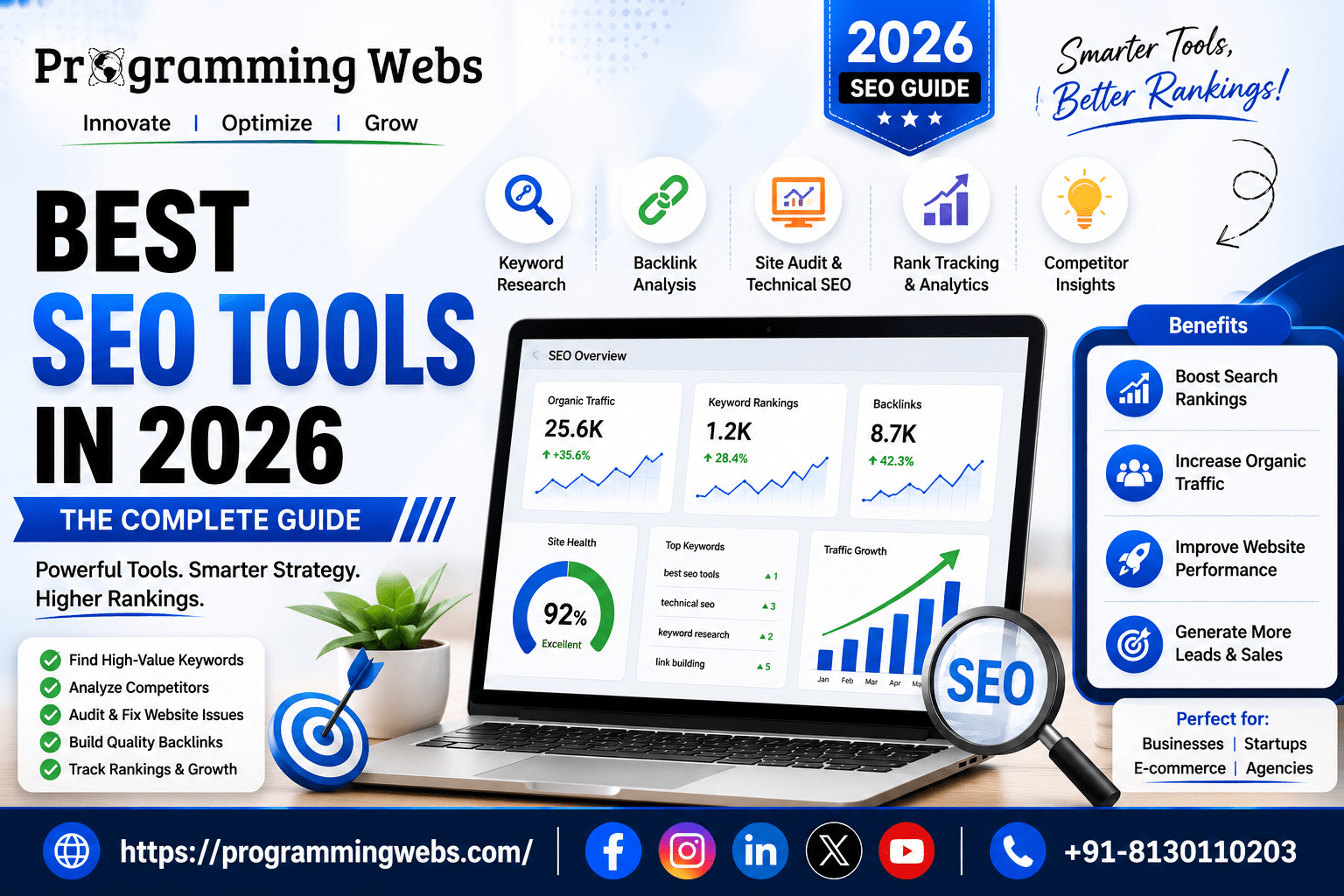
1. Keyword Research Tools
Keyword research is where every SEO strategy starts. Guess wrong here, and everything downstream — content, ads, landing pages — misses the mark.
Popular options in 2026 include Ahrefs, Semrush, and Google Keyword Planner, each offering search volume, keyword difficulty, and content gap analysis. For businesses that want a deeper, more practical breakdown of which tools actually bring qualified leads instead of just traffic, our detailed Keyword Research Tools Guide covers this in depth.
Real-life example: A local bakery client came to us convinced “cupcakes near me” was their golden keyword. Proper keyword research tools revealed “custom birthday cakes [city name]” had far lower competition and higher purchase intent — and that single shift increased their inquiry calls by over 40% in three months.
2. Technical SEO Tools
You can have the best content in the world, but if your site is slow, has broken links, or isn’t mobile-friendly, none of it matters. Tools like Screaming Frog, Google Search Console, and PageSpeed Insights help you find and fix these issues before they cost you rankings.
We’ve put together a full breakdown of platforms worth using in our Technical SEO Tools Guide, especially useful if your site has crawl errors or indexing problems.
3. Backlink & Authority Building Tools
Backlinks remain one of Google’s top ranking signals in 2026. Tools like Ahrefs, Moz, and Majestic let you analyze your backlink profile, spot toxic links, and find real link-building opportunities from your competitors.
For a deeper dive into which backlink tools are actually worth paying for, check out our Backlink Tools Guide.
4. Free SEO Tools (For Startups on a Budget)
Not every business can afford a $200/month SEO suite from day one — and that’s okay. Google Search Console, Google Analytics, Ubersuggest’s free tier, and AnswerThePublic can get a lean startup a long way.
If budget is tight, our Free SEO Tools Guide walks through exactly which free tools punch above their weight.
5. Local SEO Tools
If you run a local business or a multi-location brand, generic SEO advice won’t cut it. You need tools built for Google Business Profile optimization, citation building, and local rank tracking.
Our Local SEO Tools Guide breaks down exactly what local businesses need — and pairs well with our own Local SEO Services if you’d rather have experts handle it.
6. Google-Native SEO Tools
Don’t underestimate what Google itself gives you for free. Search Console, Analytics, Trends, and the Rich Results Test are foundational tools every business should master before adding paid software. We cover this in our Google SEO Tools Guide.
Best SEO Tools for E-commerce Brands
E-commerce SEO has its own rules — product pages, category structure, faceted navigation, and site speed all matter more here than on a typical blog or service site. Tools that combine technical audits with keyword and competitor tracking (like Semrush or Ahrefs) tend to work best for online stores.
If you’re running Shopify or WooCommerce, general SEO tools aren’t always enough — platform-specific optimization matters. That’s where our Ecommerce SEO Services, Shopify SEO Services, and WordPress SEO Services come in — combining the right tools with hands-on strategy.
Quick stat: Industry reports consistently show that over 60% of e-commerce traffic still originates from organic and paid search combined, which makes tool-backed SEO decisions a direct revenue lever, not just a “nice to have.”
Best SEO Tools Tips: How to Choose the Right Stack for Your Business
Here are some practical best SEO tools tips to avoid wasting money on software you’ll never fully use:
- Start with your biggest weakness. If your site has technical issues, prioritize a technical audit tool before spending on keyword software.
- Don’t buy five tools that do the same thing. Pick one strong all-in-one platform (like Ahrefs or Semrush) plus one or two specialized free tools.
- Track ROI, not just rankings. A tool is only “best” if it helps convert visitors into leads or sales.
- Reassess every 6 months. Tools update features constantly — what worked last year might not be the best fit today.
- Combine tools with strategy. Even the best best SEO tools won’t fix a weak content or link-building strategy on their own — they only show you where to focus.
Common Mistakes Businesses Make With SEO Tools
- Relying on a single metric (like Domain Authority) instead of looking at the full picture.
- Ignoring mobile performance data while optimizing only for desktop.
- Choosing a tool based on price alone instead of the features their business actually needs.
- Never acting on the reports the tool generates — data without action is just noise.
If any of this sounds familiar, you’re not doing anything wrong — most businesses figure this out the hard way. That’s exactly why working with a team that lives inside these tools daily can save you months of trial and error.
Why Choose ProgrammingWebs for Your SEO Journey?
We won’t pretend every SEO tool works the same for every business — because it doesn’t. What we bring to the table is the experience of actually using these tools across hundreds of real client campaigns, not just reading about them.
Here’s what sets us apart:
- Full-service expertise — from SEO Services to Google Ads Management and Meta Ads Management, we don’t just hand you a tool and walk away.
- Platform-specific know-how for WordPress Development and Shopify Development, so your SEO strategy actually fits your tech stack.
- Transparent reporting — you’ll always know what tools we’re using and why, not just a black-box monthly report.
- Growth-focused pricing — check our Pricing page for plans built around SMBs, startups, and enterprise needs.
- Proven results — browse our Portfolio to see real businesses we’ve helped grow organically.
Whether you need someone to manage the tools for you or simply want expert guidance on which stack fits your business, our team at ProgrammingWebs is ready to help. Learn more about us and how we’ve helped businesses across industries scale with data-backed SEO.
Frequently Asked Questions
1. What are the best SEO tools for beginners in 2026? Google Search Console, Google Analytics, and Ubersuggest are great starting points since they’re free, simple to learn, and cover the basics of keyword research and site health.
2. Which is the best SEO tool overall — Ahrefs or Semrush? Both are excellent all-in-one platforms. Ahrefs is often preferred for backlink analysis, while Semrush is known for its competitive research and advertising insights. The “best” one really depends on your specific goals.
3. Are free SEO tools good enough for small businesses? Yes, especially in the early stages. Many startups successfully rank using only free tools before investing in paid platforms as they scale. Our Free SEO Tools Guide covers this in detail.
4. How often should I check my SEO tools and reports? Weekly for quick health checks, and a deeper monthly review to track keyword rankings, backlinks, and traffic trends.
5. Do SEO tools guarantee first-page rankings? No tool can guarantee rankings — Google’s algorithm considers hundreds of factors. Tools give you the data and direction; consistent strategy and execution get you the results.
6. What’s the difference between technical SEO tools and keyword tools? Technical SEO tools (like Screaming Frog) find and fix site issues affecting crawlability and speed, while keyword tools (like Ahrefs’ Keyword Explorer) help you find what your audience is searching for.
7. Can SEO tools help e-commerce stores specifically? Absolutely. E-commerce-focused audits catch issues like duplicate product pages, thin content, and poor site structure — all of which directly affect conversions and rankings.
Final Thoughts: Turn Data Into Growth
Choosing the best seo tools isn’t about collecting the flashiest software — it’s about picking the right combination for where your business is right now, and using that data to make real decisions. Whether you’re a startup testing your first keywords or an enterprise managing a multi-location SEO campaign, the right tools (used well) can be the difference between guessing and growing.
If you’d rather skip the trial-and-error and get expert hands on your SEO strategy, our team is one message away. Contact us today for a free consultation, explore our Services page to see everything we offer, or browse the ProgrammingWebs Blog for more in-depth guides like this one.
Your next page-one ranking starts with the right decision today — let’s build it together.