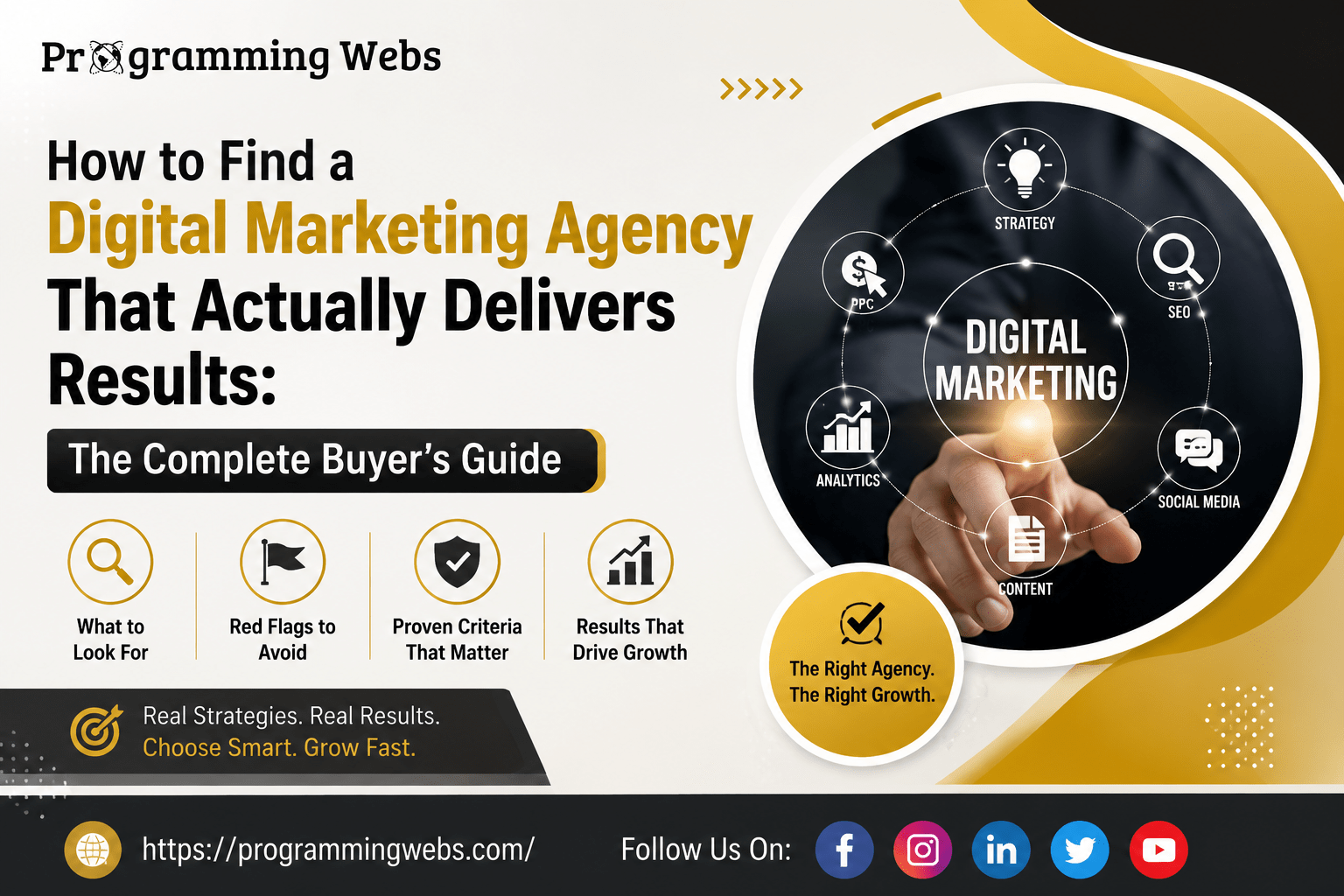
The $50,000 Mistake: Why Most Businesses Hire the Wrong Digital Marketing Agency
Let me tell you about a conversation I had last month with a frustrated e-commerce founder in Bangalore.
She’d just fired her third digital marketing agency in 18 months.
“We spent ₹2,50,000 on SEO,” she told me, frustration evident in her voice. “The agency sent reports showing rankings improved, traffic increased, all these numbers. But our actual revenue didn’t move. No real customers came.”
Sound familiar?
The problem wasn’t her business and market. The problem was that she didn’t know how to identify a digital marketing agency that actually delivers measurable business results.
According to recent industry surveys, approximately 67% of businesses report dissatisfaction with their marketing agency. They paid money, got activity, but didn’t get outcomes.
Here’s the brutal truth: Many digital marketing agencies are selling activity, not results.
They’ll send you reports showing impressive metrics that mean absolutely nothing for your bottom line. Rankings up, traffic up, leads… nowhere. Money out, results nowhere to be found.
This guide exists to save you from that nightmare.
Over the past five years at ProgrammingWebs, I’ve worked with hundreds of businesses who came to us after firing previous agencies. I’ve learned exactly what separates agencies that genuinely drive business growth from those that are just collecting checks.
In this guide, you’ll discover:
✓ The exact criteria for evaluating any digital marketing agency ✓ Red flags that signal an agency will waste your money ✓ Green flags that indicate a trustworthy partner ✓ How to evaluate proposals and pricing ✓ Questions to ask before hiring ✓ How to structure your engagement for actual results
Let’s start with the most important principle.
The Fundamental Problem: Activity vs. Outcomes
Here’s why so many agency relationships fail.
Agencies measure success by activity. Clients need results.
These two things are often completely misaligned.
An agency delivers activity metrics:
- “We posted 12 blog articles this month”
- “We secured 47 backlinks”
- “Your organic traffic increased by 23%”
- “We ran 156 paid ads”
What you actually care about:
- Did we get real customers?
- Did revenue increase?
- Do we have qualified leads in our pipeline?
- Is this generating ROI?
The worst agencies hope you won’t notice the difference. They’ll show impressive dashboards, beautiful charts, metrics that look good on presentations.
But none of it connects to money.
The right agency bridges this gap. They understand that every SEO Services initiative should ladder up to a business goal. Every Google Ads Management dollar should be tracked to revenue. Every Landing Page Design should optimize for a specific conversion goal.
They think like your business partner, not like a service vendor.
The Agency Landscape in 2026: Understanding Who You’re Evaluating
Before choosing an agency, you need to understand what types of agencies exist.
Type 1: Freelancers Operating as “Agencies”
What to know:
- Often 1-3 people calling themselves an agency
- Cheap ($15-50/hour)
- Limited expertise across services
- No project management infrastructure
Best for: Tactical, short-term projects Avoid for: Strategic, long-term growth partnerships
Red flags: Unlimited availability, extremely low prices, no case studies, no defined processes
Type 2: Boutique Agencies (5-25 people)
What to know:
- Specialize in specific services (SEO-only, ads-only, web dev-only)
- Can offer depth in their specialty
- Limited cross-functional capabilities
- Often founder-driven
Best for: You if you need deep expertise in one area (like pure WordPress Development or Shopify Development) Avoid for: You if you need coordinated strategy across multiple channels
Red flags: Defensive about other services, limited case studies outside their specialty, no integrated reporting
Type 3: Mid-Market Agencies (25-150 people)
What to know:
- Can offer multiple services
- Professional infrastructure and processes
- Account managers and team structure
- Geographic presence
Best for: Most growing businesses Avoid for: Highly specialized needs (go boutique), or extremely tight budgets
Red flags: Pressured sales, quick contracts, slow communication, not willing to customize
Type 4: Enterprise Agencies (150+ people)
What to know:
- Full-service (everything from brand to performance)
- Expensive ($15,000-50,000+/month minimums)
- Bureaucratic processes
- May assign juniors to your account
Best for: Fortune 500 companies, massive budgets, enterprise-level complexity Avoid for: Most growing businesses
Red flags: High-pressure sales tactics, “we don’t customize,” boilerplate proposals, minimums that don’t fit your budget
The Essential Criteria for Evaluating Any Digital Marketing Agency
Use this framework to evaluate ANY agency, regardless of type.
Criterion 1: Demonstrated Experience in YOUR Industry
Why it matters: An agency that says “we work with all industries” doesn’t really understand any of them deeply.
What to look for:
- Specific case studies in your industry
- Named client examples (with permission)
- Understanding of your competitive landscape
- Knowledge of your customer’s buying journey
Red flag: “We have experience across all industries” or “every business is the same, so our strategies work everywhere”
How to verify: Ask for 3-5 case studies from your specific industry or adjacent industries. If they can’t provide them, that’s a problem.
Our approach: At ProgrammingWebs, we specialize in specific verticals. We have deep experience with e-commerce (Shopify and WordPress), local services, SaaS, and technology companies. Our Portfolio shows specific results in these categories.
Criterion 2: Clear Connection Between Activity and Results
Why it matters: The agency should be able to explain exactly HOW their activities lead to your business outcomes.
Red flag metrics:
- “Traffic increased 45%” (but did it generate revenue?)
- “We built 67 backlinks” (but did rankings move?)
- “We managed 1,200 ad impressions” (but what was the actual ROI?)
Green flag metrics:
- “We increased organic leads by 28%, resulting in ₹12 lakhs in attributed revenue”
- “Cost per lead decreased from ₹850 to ₹520”
- “Your sales pipeline increased by 310%, with qualified leads from our campaigns”
How to verify: In your first conversation, ask: “Walk me through your last 3 successful projects. Show me where you started, what you did, and how it connected to the client’s revenue or business outcome.”
A good agency will have this answer ready. They won’t scramble.
Criterion 3: Transparent, Honest Communication About What’s Possible
Why it matters: Desperate agencies over-promise. Good agencies are honest about timelines and realistic outcomes.
Red flags:
- “We guarantee #1 rankings on Google”
- “We’ll triple your leads in 30 days”
- “Our SEO strategy beats all competitors”
- Any guarantee that ignores market conditions, competition, or complexity
Green flags:
- “Here’s what we typically see in your industry: 3-6 months for initial traction, 6-12 months for significant results”
- “Your competitors’ backlink profiles suggest this will be challenging, but here’s our approach”
- “Results depend on several factors. Here’s what we control and what we don’t”
The honest version of agency promises:
- SEO works but takes time (3-6 months minimum for results)
- Paid ads can be profitable but require optimization and testing
- Web development is infrastructure, not a sales solution by itself
- Results depend on your offer, market, competition, and execution quality
How to verify: Listen carefully to their first proposal. Do they acknowledge complexity? Do they explain trade-offs? Or do they pretend every promise is guaranteed?
Criterion 4: Proper Process & Documentation
Why it matters: Good agencies follow defined processes. Chaos isn’t a sign of creativity—it’s a sign of poor execution.
What to look for:
Strategy Phase:
- Written discovery process before any work begins
- Documented audit of your current situation
- Competitive analysis
- Written strategic recommendations with rationale
- Approval before work starts
Execution Phase:
- Project management system (Asana, Monday, etc.)
- Regular status updates (weekly, not monthly)
- Documentation of what was done and why
- A/B testing and optimization approach
- Clear success metrics defined upfront
Reporting Phase:
- Monthly reports showing activity AND results
- Connection between activity and business outcomes
- Clear explanation of what’s working and what isn’t
- Recommendations for next steps
Red flags:
- No discovery process, jumping straight to execution
- “We’ll figure it out as we go”
- No project management visibility
- Reports that are vague or don’t connect to your goals
- Communication only when requesting updates
How to verify: Ask to see their onboarding process, a sample project timeline, and a sample report. You should be able to understand exactly what you’re paying for and how it’s measured.
Criterion 5: Honest Assessment of Your Current Situation
Why it matters: A good agency will tell you hard truths, not just confirm what you want to hear.
Healthy red flag when meeting an agency: During initial conversations, does the agency point out problems with your current approach? Or do they just agree with everything you say?
Examples of good, hard-truth conversations:
Scenario 1: Your website is poorly structured
- Bad agency: “Your website is fine, we can just do SEO and it will rank”
- Good agency: “Your site structure is working against your SEO. Before we do SEO optimization, we need to fix the Website Development foundation. Here’s why and here’s the timeline.”
Scenario 2: Your offer/pricing is misaligned with market
- Bad agency: “We’ll just run more ads”
- Good agency: “I’m seeing your conversion rate is 0.8%, which is below industry average. Before we spend more on ads, let’s talk about your offer and whether we need Conversion Rate Optimization first.”
Scenario 3: Your competitor strategy needs work
- Bad agency: “We’ll just out-optimize them”
- Good agency: “Your competitors have 3x more authority. This will be a multi-year play. Here’s what’s realistic and here’s what we need to invest.”
How to verify: In initial conversations, see if the agency points out any challenges or problems. If they only praise your business and have solutions for everything, be skeptical.
Criterion 6: Proper Team Structure & Continuity
Why it matters: You don’t want your account managed by whatever junior is available. You want a dedicated team with clear ownership.
What to look for:
✓ Dedicated account manager who knows your business ✓ Named specialists (SEO strategist, paid ads expert, web developer) ✓ Clear escalation path if there’s a problem ✓ Documented handoff process when team members change ✓ Regular strategic reviews (quarterly minimum)
Red flags:
- “Your contact will be whoever’s available”
- High turnover on accounts (people leaving the agency frequently)
- No clear team assigned to your account
- Account manager who “doesn’t really know” your business details
Questions to ask:
- “Who will be my primary contact?”
- “Who are the specialists working on my account?”
- “What happens if my account manager leaves?”
- “How often do we meet strategically?”
- “What’s your average team tenure?”
Criterion 7: Technology & Tools Competency
Why it matters: A good agency stays current with tools and knows which ones actually matter for your business.
Platform expertise to verify:
If you need SEO Services:
- Do they understand Google’s algorithm updates?
- Can they properly implement WordPress SEO Services or Shopify SEO Services?
- Do they have hands-on experience with technical SEO?
If you need Google Ads Management:
- Can they explain bid strategies and quality score?
- Do they have Google Partner certification?
- Can they show experience with your specific campaign types?
If you need Website Development:
- Do they understand performance optimization?
- Can they explain mobile-first indexing implications?
- Have they built sites at scale?
Red flags:
- “We don’t really focus on that tool/platform”
- Dated technology stack
- Unfamiliarity with current platform features
- Over-reliance on outdated strategies
Red Flags: Stop Signs That Should End Your Consideration
If ANY of these are true, eliminate the agency immediately.
Red Flag 1: Pressure to Sign Long-Term Contracts Without Proof
A trustworthy agency is confident in delivering results. They don’t need to lock you into 12-month contracts upfront.
What to expect:
- Proper 3-month pilot or onboarding period
- Contracts that have performance break clauses
- Willingness to work on monthly basis after initial commitment
- Clear cancellation terms
What NOT to accept:
- “You need to sign for 12 months or we can’t start”
- Contracts with no exit clauses
- Non-refundable retainers upfront
- Penalties for early termination
Red Flag 2: No Defined ROI or Success Metrics
Before you hire, you should be crystal clear on how you’ll measure success.
Problem: Some agencies will intentionally keep metrics vague. This gives them wiggle room if results don’t arrive.
What to demand:
- Written agreement on what success looks like
- Specific metrics tied to your business goals
- Timeline for when you should see results
- Clear reporting cadence
Red flag response: “We can’t guarantee results” → True, but they CAN show you realistic expectations and their track record “Results take time, just trust us” → Unacceptable. Time shouldn’t be an excuse for lack of transparency “Everyone’s situation is different” → True, but they should still define YOUR situation’s metrics
Red Flag 3: Cookie-Cutter Proposals
Every business is different. So your strategy should be different.
Red flag: You get a proposal that looks identical to every other client’s (you find out from talking to other businesses)
What this means: The agency isn’t customizing to your needs. They’re applying the same playbook to everyone.
What to demand:
- Discovery-based proposal that references your specific situation
- Customized strategy that acknowledges your competitive landscape
- Specific recommendations tied to your goals
- Timeline that reflects your business stage
Red Flag 4: Unclear or Inflated Pricing
Pricing isn’t everything, but it should make sense.
Red flag pricing scenarios:
- Extremely cheap ($500-1500/month for full services)
- Either they’re using juniors/automation exclusively, or this won’t get priority attention
- Vague pricing (“it depends”)
- This is how they hide scope creep and unexpected costs
- Fixed outcome pricing without strategy discussion
- “₹50,000 for top 10 rankings” (that’s a guarantee they can’t actually make)
- No breakdown of what you’re paying for
- Should be clear: ₹X for strategy, ₹Y for execution, ₹Z for reporting
What to expect:
- Clear, itemized pricing
- Industry-standard rates (₹2,000-5,000/month for SEO, ₹3,000-8,000 for ads, ₹1,500-4,000 for web dev depending on scope)
- Scalable pricing that grows as your business grows
- Transparent explanation of costs
Red Flag 5: Portfolio With No Real Numbers
A portfolio should show:
- The client’s starting point
- What was done
- The results achieved
- The timeline
Red flag:
- “Traffic increased” without specific percentages or timeline
- Vague results (“improved conversions”)
- No context on competitive difficulty
- No timeline shown
Good portfolio example: “Local plumbing business in Hyderabad. Started with 5 local leads/month. Implemented Local SEO Services strategy. 8 months later: 34 leads/month, cost per lead decreased by 45%, ₹8 lakhs in attributed revenue.”
Red Flag 6: They Want to Control Everything
Healthy agencies are collaborative. Controlling agencies are protecting something.
Red flags:
- “We need complete access to everything”
- Won’t let you see strategies or plans
- Makes you dependent on them for everything
- Refuses to document their process
What to expect:
- You maintain ownership of your assets
- Agency documents everything for knowledge transfer
- Clear explanation of what they do and why
- Support for questions/transparency requests
Red Flag 7: Poor Communication in Initial Sales Process
How an agency treats you during the sales process is exactly how they’ll treat you as a client.
Red flags:
- Slow to respond to emails/calls
- Vague answers to technical questions
- Pushes you to decide before you’re ready
- Dismissive of your concerns
- Sales person doesn’t align with service team
What to expect:
- Responsive communication
- Clear answers to technical questions
- Patient explanation of options
- Genuine interest in understanding your business
- Transparency about capabilities and limitations
Green Flags: Signs of a Trustworthy Agency
Now let’s flip to what you SHOULD see.
Green Flag 1: They Ask Strategic Questions First
A good agency asks before recommending.
What to expect in initial discovery:
“Tell me about your business goals. What would a successful year look like?”
“Who is your ideal customer? Why do they buy from you instead of competitors?”
“What have you tried before? What worked, what didn’t?”
“What’s your current traffic/leads/revenue? What do you want it to be?”
“What’s your budget and timeframe?”
An agency asking these questions is thinking strategically about your needs, not immediately jumping to their service pitch.
Green Flag 2: Honest About Competitive Difficulty
A good agency does competitive analysis during discovery and shares it with you.
What this sounds like: “Your top 3 competitors have 240+ backlinks each. You have 12. This is going to take 12-18 months of strategic SEO Services to compete. Here’s the realistic timeline and investment.”
Why this matters: They’re setting realistic expectations. They’re not pretending everything is easy.
Green Flag 3: They Show How Services Connect
A trustworthy agency shows how different services work together.
Example narrative: “We’ll start with Website Development to optimize your site structure for SEO. Simultaneously, we’ll run Conversion Rate Optimization on your pages to improve conversion rates. Then SEO Services and Google Ads Management work together to drive qualified traffic to these optimized pages. Here’s how each component supports the others.”
This shows integrated thinking, not just service selling.
Green Flag 4: They Provide Data-Backed Recommendations
When they recommend something, they have reasoning.
Example: “Your current conversion rate is 1.2%, which is below industry average of 2.1% for your category. I recommend Landing Page Design optimization first. This will multiply the value of every visitor you’re already getting. Here’s what we typically see when we optimize landing pages: 30-50% conversion improvement over 3 months.”
This shows:
- They’ve analyzed your situation
- They have benchmarks from similar businesses
- They understand the order of priorities
- They can show expected results
Green Flag 5: They’re Transparent About What They Don’t Do
Honest agencies acknowledge limitations.
What to listen for: “We don’t have deep expertise in Shopify Development, but we partner with specialists who do”
“This isn’t our core strength, but here’s what we’d recommend”
“That falls outside our services, but here’s how we’d help you find the right partner”
Agencies that pretend they’re expert at everything are lying.
Green Flag 6: They Have Your Industry Experience in Writing
Look at their Blog. Do they have articles showing deep industry knowledge?
What to look for:
- Articles about your specific industry challenges
- Proof they understand your customer’s buying journey
- Detailed case studies showing specific results
- Content that demonstrates expertise
This shows they invest in educating businesses like yours, not just selling services.
Green Flag 7: They Explain E.E.A.T. and Trust Signals
A modern agency understands that Google (and customers) evaluate business credibility.
What good agencies discuss: “We’ll build your E.E.A.T. (Expertise, Authoritativeness, Trustworthiness) through Website Development that clearly shows credentials, SEO Services that builds topical authority, and content that demonstrates genuine expertise in your field.”
This shows they understand modern ranking factors and business credibility.
How to Evaluate Proposals: The Framework
When you receive proposals from agencies, use this evaluation matrix.
1. Strategy Quality (40% of evaluation)
Does the proposal demonstrate deep understanding of your business?
- Specific competitive analysis mentioned
- References to your industry challenges
- Clear explanation of recommended approach and why
- Realistic timelines
- Acknowledgment of complexity
Red flag score: Generic proposal that could apply to any business Green flag score: Customized strategy showing clear understanding
2. Team & Process (25% of evaluation)
Is the execution plan clear and well-structured?
- Named team members with credentials
- Defined project management process
- Clear deliverables and timeline
- Communication cadence specified
- Escalation path documented
Red flag score: “Our team will handle it” (vague) Green flag score: Named specialists, defined roles, clear process
3. Expected Results & Metrics (20% of evaluation)
Are results clearly defined and realistic?
- Specific metrics tied to your goals
- Timeline for when you should see results
- Realistic ranges (“we typically see 15-35% improvement”)
- Explanation of what success looks like
- Reporting frequency
Red flag score: “We’ll increase your rankings” (vague) Green flag score: “Within 6 months, we expect 12-18 new organic leads/month, based on current traffic patterns”
4. Pricing & Value (15% of evaluation)
Is pricing transparent and reasonable?
- Clear breakdown of services and costs
- No hidden fees or vague line items
- Justified by scope and team quality
- Flexible structure (pilot, then scale)
- Industry-standard rates
Red flag score: Suspiciously cheap or inflated Green flag score: Transparent, justified, reasonable for scope
Critical Questions to Ask Before Hiring
Print these out. Ask them. Listen carefully to answers about.
Past Performance:
- “Can you show me 3 specific case studies from my industry? Include starting point, what you did, and exact results with timeline.”
- “What’s the average ROI your clients see? How do you measure it?”
- “How many clients fire you each year? Why do they leave?”
- “What’s your average client retention? How long do engagements typically last?”
Your Situation:
- “Based on what you know so far, what do you see as our biggest opportunities?”
- “What do you see as our biggest challenges?”
- “What would success look like for us in 12 months?”
- “What’s realistic vs. aspirational in terms of results?”
Execution:
- “Walk me through your onboarding process step-by-step.”
- “How often will we communicate? Will it be the same person or rotating?”
- “Show me a sample report and walk me through it.”
- “How do you handle disagreements or if results aren’t tracking?”
- “What’s your process for A/B testing and optimization?”
Commitment:
- “What’s your contract term? Are there break clauses?”
- “What’s included in the price? What costs extra?”
- “If I want to take my work elsewhere, how do you handle knowledge transfer?”
- “What’s your cancellation policy?”
Them:
- “Why should I choose you over your competitors?”
- “What are you NOT good at?”
- “How do you stay current with algorithm changes and new tools?”
Evaluating by Service Type: Specific Criteria
Depending on what you need, different evaluation criteria matter more.
If You Need SEO Services
What matters:
- Can they explain how they’d optimize your site?
- Do they understand both technical SEO and content SEO?
- Can they show competitive keyword analysis specific to your industry?
- Do they have results in your industry niche?
Question to ask: “Walk me through exactly how you’d approach WordPress SEO Services [or Shopify SEO] for our site. What would months 1-3 look like?”
Red flag: “We’ll just create more content and build backlinks” (too simplistic)
Green flag: Detailed technical audit, keyword strategy, content plan, and backlink strategy all connected
If You Need Website Development
What matters:
- Do they build for conversion, not just aesthetics?
- Will they coordinate with your SEO and ads strategy?
- Can they show performance-optimized sites?
- Do they understand Conversion Rate Optimization?
Question to ask: “Show me a Website Development project where you increased conversions. Walk me through the changes you made.”
Red flag: Pretty websites with no conversion focus
Green flag: Portfolio shows before/after conversion metrics
If You Need Paid Ads
What matters:
- Can they explain bid strategy and quality score?
- Do they have certifications (Google Partner, Facebook Marketing Partner)?
- Can they show ROAS (Return on Ad Spend) by campaign?
- Do they do continuous optimization?
Question to ask: “Walk me through your last 3 successful campaigns. Show me the starting ROAS, how you optimized, and final ROAS.”
Red flag: Can’t explain cost per lead or ROI clearly
Green flag: Detailed account optimization history with clear metrics
If You Need Local SEO
What matters:
- Do they understand local ranking factors?
- Can they show local business results?
- Do they know local citation building?
- Can they optimize Google Business Profile effectively?
Question to ask: “How would you approach Local SEO Services for a business like ours in our geographic area?”
Red flag: Generic answer that could apply anywhere
Green flag: Specific strategy mentioning your city, local competitors, local factors
Understanding Agency Failures: What Goes Wrong & How to Prevent It
Based on businesses we’ve worked with who switched agencies, here’s what typically goes wrong.
Failure Pattern 1: Strategy-Execution Disconnect
What happens: Agency creates impressive-looking strategy document. Then execution doesn’t match.
Red flag: Strategy says “focus on content SEO” but they’re just building random backlinks
How to prevent:
- Ask how they ensure execution matches strategy
- Request monthly reports that explicitly reference strategy
- Schedule quarterly strategy reviews
- Be willing to fire them if execution drifts
Failure Pattern 2: Activity Reporting Without Outcome Reporting
What happens: You get reports showing “posts published,” “ads spent,” “link velocity” but nothing about actual results.
Red flag: Reports only show activity metrics
How to prevent:
- Demand outcome metrics in contracts (leads, revenue, conversions)
- Compare monthly results to baseline
- Track your own metrics independently
- Fire them if you can’t connect activity to results
Failure Pattern 3: Team Turnover and Knowledge Loss
What happens: Your account manager leaves. New person doesn’t understand your business. Service quality drops.
Red flag: Agency has high turnover
How to prevent:
- Ask about retention rates upfront
- Require documented handoffs when team changes
- Schedule regular strategy reviews to maintain continuity
- Get critical knowledge documented
Failure Pattern 4: Scope Creep Without Results
What happens: Agency keeps expanding services (“let’s also do social media!” “let’s build a blog!”) without proving ROI on original services.
Red flag: They’re pitching new services but not showing results from existing ones
How to prevent:
- Only add services after current services are proven
- Demand ROI before expanding scope
- Be willing to say no to shiny new things
- Fire them if they’re just selling more services without results
The ProgrammingWebs Approach: How We Evaluate Differently
Let me be transparent about how we work, so you can evaluate us against these criteria.
We Start With Your Business Reality
Before recommending anything, we understand:
- Your actual business goals (revenue, leads, customers)
- Your competitive landscape
- Your current customer situation
- Your resources and budget
We ask hard questions. We’ll tell you if we think something won’t work.
We Deliver Outcome-Based Reporting
Our reports show:
- What we did (activity)
- Why we did it (strategy)
- What happened as a result (outcomes)
- How it connected to your business goal
We connect SEO performance to lead generation, connect design choices to conversion improvements, and connect ad spend to revenue.
We Specialize, Not Generalize
Focus on specific business types and services:
- E-commerce businesses (Shopify and WordPress)
- Local services businesses
- SaaS and tech companies
This means we have deep industry knowledge and proven Portfolio results in your space.
We Build Services That Work Together
Whether you need Website Development, SEO Services, Google Ads Management, or Landing Page Design, we ensure they all support each other.
Not service silos. Integrated strategy.
We’re Transparent About Timelines & Costs
- SEO takes 3-6 months minimum to show results
- Website optimization returns depend on current baseline
- Paid ads can work faster but require scale
- We provide clear pricing and realistic expectations
We Document Everything
You own your strategy, your content, your data. We document everything so you could move to another agency if needed (though we hope you don’t!).
Why Some Agencies Disappoint (And How to Identify Them Early)
This connects to a deeper analysis we’ve written: Why Did My SEO Agency Disappoint Me? (And How to Avoid It)
The core reasons agencies fail clients:
- They’re not actually expert (they’re learning on your dime)
- They sell services, not results (they measure success by contracts, not outcomes)
- They don’t understand YOUR business (generic strategies for all)
- They over-promise, under-deliver (rankings come slower than promised)
- They’re not transparent (vague reports, hiding challenges)
- Team turnover destroys continuity (new people, lost context)
- They don’t adapt (same playbook for every client)
Evaluate agencies against ALL of these to separate good from bad.
The Real Cost of Choosing Wrong
Let me frame this honestly.
A mid-market agency charging ₹2,00,000/month for a year costs you ₹24 lakhs.
If they deliver good results, that’s an investment that paid for itself.
Average agencies might deliver 30–40% ROI, which is worse than your cost of capital.
Bad agencies cost you ₹24 lakhs and 12 months of time.
That’s not just a financial loss. That’s a lost year of business growth.
Choose wisely.
Your 10-Step Framework for Choosing an Agency
Step 1: Define Your Goals (Week 1)
What does success look like? Revenue? Leads? Customers? Be specific.
Step 2: Establish Your Baseline (Week 1)
What’s your current traffic? Conversions? Leads? Cost per customer? Document this.
Step 3: Create Your Shortlist (Week 2)
Research 5-8 agencies. Check Reviews, Portfolio, case studies.
Step 4: Initial Conversations (Week 2-3)
Have phone calls with 3-4 agencies. Notice:
- How well do they listen?
- How specific are their answers?
- Do they ask good questions?
- Do they seem trustworthy?
Step 5: Competitive Analysis (Week 3)
Ask each agency: “Who are our competitors? How do they rank? What’s their backlink profile?”
Listen to whether their answers are specific and detailed.
Step 6: Request Proposals (Week 3)
Ask for written proposals from your top 2. Should include:
- Discovery findings
- Recommended strategy
- Specific metrics and timeline
- Team assigned
- Detailed pricing
Step 7: Reference Calls (Week 4)
Ask for 2-3 references. Call them. Ask:
- Did they deliver results?
- Was communication good?
- Any problems? How handled?
- Would you hire them again?
Step 8: Evaluate Proposals (Week 4)
Use the matrix we discussed. Score each agency.
Step 9: Negotiate Terms (Week 4)
Don’t accept first proposal as-is:
- Negotiate contract length
- Request pilot phase
- Clarify scope
- Get SLAs in writing
Step 10: Start With Pilot Phase (Month 2)
- 3-month commitment minimum
- Clear success metrics
- Weekly check-ins
- Pause or exit if not working after 3 months
FAQ: Common Questions About Finding Agencies
“How much should I budget?”
Answer: Depends on service and scope:
- SEO only: ₹2,000-8,000/month
- Web development: ₹50,000-2,00,000+ depending on complexity
- Paid ads: ₹3,000-10,000/month (plus ad spend)
- Full service: ₹15,000-50,000+/month
Reality: Cheaper doesn’t mean worse, expensive doesn’t mean better.
“Should I hire a local agency or can I work remote?”
Answer: Doesn’t matter. What matters:
- Can they deliver results for your situation?
- Do they understand your market (geographic and industry)?
- Is communication good?
- Do they provide timezone overlap for communication?
We work with clients across India (and beyond). Location is secondary to competence.
“How long before I should see results?”
Answer: Depends on service:
- Paid ads: Results visible in 2-4 weeks
- Website optimization: 4-8 weeks
- SEO: 3-6 months minimum
- Comprehensive strategy: 6-12 months for full impact
If they promise faster, be skeptical.
“Should I try freelancers first?”
Answer: Sometimes. Freelancers are good for:
- Specific, tactical projects
- Tighter budgets
- Short-term needs
Avoid freelancers for:
- Long-term strategy
- Projects requiring multiple disciplines
- Businesses needing dedicated account management
“What if the agency isn’t delivering?”
Answer: You have options:
Week 4-8: Talk to them. Maybe they’re optimizing but haven’t shown results yet.
Month 3: Evaluate honestly. Are they making progress toward metrics? If not, this is natural exit point.
Month 3-6: If still no progress, fire them. 6 months is long enough to know if strategy is working.
Note: Give strategies time (3-6 months minimum) but not infinite time. Agency foot-dragging past 6 months is a red flag.
“Can I work with multiple agencies simultaneously?”
Answer: Yes, if structured correctly:
- Different specialties (one for SEO, one for ads)
- Clear coordination expectations
- Defined scopes so they don’t conflict
But: Can become confusing with multiple vendors. Usually better to find one good agency for everything (if possible).
The Bottom Line: What Separates Great Agencies From Average Ones
After years of working with hundreds of businesses, here’s what I’ve learned.
Great agencies:
- ✓ Think like business partners, not service vendors
- ✓ Connect every activity to business outcomes
- ✓ Are honest about what’s possible and realistic
- ✓ Provide documented strategy and clear process
- ✓ Show proven results in your industry
- ✓ Communicate proactively and transparently
- ✓ Have dedicated, stable teams
- ✓ Specialize rather than generalize
- ✓ Ask hard questions before recommending
- ✓ Measure success by your results, not their activity
Average agencies:
- ✗ Measure success by activity and contracts
- ✗ Hide strategy in vague terms
- ✗ Make unrealistic promises
- ✗ Send reports that don’t connect to your goals
- ✗ Claim expertise across all industries
- ✗ Have high team turnover
- ✗ Pressure you into long contracts
- ✗ Over-promise and under-deliver
When evaluating any agency (including us), hold them to these standards.
Ready to Find Your Agency Partner?
If you’re looking for a digital marketing partner that genuinely delivers results, we’d like to talk.
How We’re Different:
We Specialize E-commerce businesses, local services, SaaS companies. Not “all industries.”
We Show Results Check our Portfolio. Real clients. Real results.
We Integrate Services Website Development + SEO Services + Google Ads Management work together, not in silos.
We’re Transparent See our Pricing. No hidden costs. No vague proposals.
We Document Everything You own your strategy, your content, your data. We document it all.
Let’s Talk About Your Goals
Whether we’re the right fit or not, we believe you deserve a trustworthy agency partner.
Schedule a consultation with our team. We’ll:
- Understand your actual goals (not just sell you services)
- Analyze your competitive situation
- Identify your biggest opportunities
- Recommend the best path forward (which might be SEO, might be ads, might be website optimization)
- Give you honest assessment of what’s realistic
No pressure. No upsell. Just honest evaluation of your situation and recommendations for growth.
→ Contact ProgrammingWebs today to start a conversation with a digital marketing partner that actually listens.
Related Resources
- Why Did My SEO Agency Disappoint Me? (And How to Avoid It)
- Best SEO Tools in 2026: The Complete Guide That Actually Helps You Rank
- Google SEO Tools in 2026: A Practical, Data-Backed Guide
- Technical SEO Tools in 2026: The Complete Guide That Finally Makes Sense
- Backlink Tools in 2026: The Expert’s Guide to Building Authority
- Best WordPress SEO Plugins in 2026: A Practical, Tested Guide
- Local SEO Tools in 2026: A Practical, Tested Guide
Last Updated: July 2026 | Written By: ProgrammingWebs Strategy Team | Expertise: 5+ years helping businesses choose and evaluate digital marketing partners